Cooling system
A hot gauge is a warning. We find the leak before the engine pays for it.
Coolant puddles, steam or a climbing temperature gauge point at the cooling system. We pressure test it, find the leak, then repair or install the radiator at our Main St shop in Green Bay.
Chapter 01
What a failing cooling system tells you
Your vehicle's cooling system is the only thing standing between a smooth drive and an engine that cooks itself. The warnings come in a few forms: a temperature gauge creeping up in traffic, steam from under the hood, a sweet smell after you park, or a coolant puddle under the front of the car. A heater that blows cool can point the same way.
Radiators fail in predictable ways. Plastic end tanks crack where they meet the core, the core clogs from old coolant, and hoses soften at the clamps. Driving on a hot gauge is the costly mistake. An engine that overheats can warp parts that no radiator job will fix, so pull over early and call the shop on Main St.
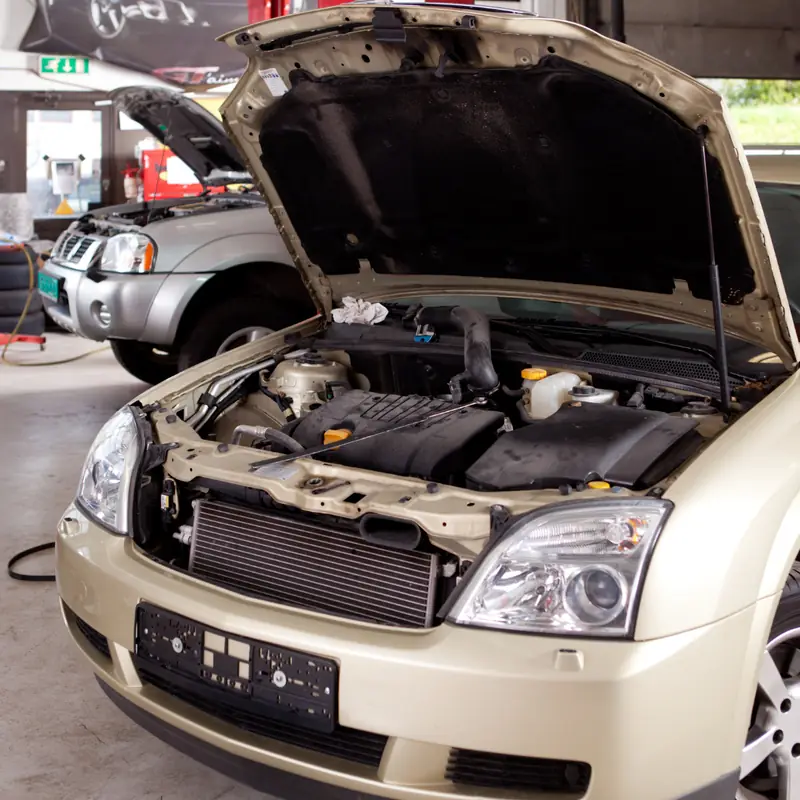
Sedan with its hood open in the shop, front of the engine bay and radiator area visible
Pressure test, then the radiator
We start by looking at the radiator itself, then put the cooling system under pressure. A system that holds pressure has no leak; one that drops shows you where the coolant is going, whether that's a tank seam, a hose, a water pump seal or the core. That's how we find the leak instead of guessing and swapping parts.
From there the radiator is repaired or replaced, and the system is refilled and bled, because trapped air gives false readings and hot spots. We check the hoses, the thermostat and the fan too, since a new radiator behind a stuck thermostat solves nothing. All of it is done in our own bays in Green Bay, with honest, budget-friendly service.
Chapter 03
Keeping it cool afterward
After the job, check the coolant level once the engine is cold, not hot, and keep checking it for the first week or two. A level that keeps dropping means air or a slow leak is still in the system, and that's a reason to come back, not a reason to keep topping off.
Winter matters here. Antifreeze protects against freezing as well as boiling, and Green Bay cold is hard on a weak mixture, so the strength of the coolant is worth testing before the first deep freeze. If the gauge climbs again, shut the engine off safely and call (920) 217-5911 or bring it to the shop.
Gauge climbing or coolant on the ground? Bring the car to 1644 Main St, Green Bay, or call (920) 217-5911.
Cooling chart
Symptom, finding, fix
Overheating has more than one cause, which is why a radiator isn’t the first thing we sell you. The three patterns below are the ones we see most. If the gauge climbs and the car quits on the road, our towing brings it in, and a warm cabin on a hot day is a job for auto AC services.
Gauge climbs in traffic, settles on the highway
Low coolant, a weak cooling fan or a clogged core that can't shed heat at a standstill, confirmed with the system under pressure.
The fan or radiator repaired or replaced, then the system refilled and bled.
Sweet smell and a puddle under the front of the car
A leak at a cracked end tank, a hose clamp or the core, located by the pressure that forces it to show itself.
The leaking part repaired or the radiator installed new, with hoses checked.
Heater blows cool and the coolant level keeps dropping
Air trapped in the system, a stuck thermostat or a slow leak that only shows when it's hot.
Thermostat checked, the system bled of air and topped up to the mark.