Transmission
Slipping gears? We find out why before we pull anything
Filter, fluid and leaks first, and a new or rebuilt unit only when replacement is the honest answer. Manual or automatic, done at our Main St shop in Green Bay.
Chapter 01
What a failing transmission feels like
Transmission trouble announces itself through the way the car shifts. Slipping, where the engine revs but the car does not keep up. Hesitation when the gears change, or a delay when you put it into drive. Strange noises, vibration, fluid leaks, or a complete loss of power. Any of these deserves an inspection before it gets worse, because heat and metal debris make a small problem bigger every mile.
Fluid is where most of it starts, whether the car is a manual or an automatic. Low fluid, burnt fluid or a clogged filter can mimic a failing unit, and a leak from a pan gasket or a cooler line is a far smaller job than an overhaul. Telling those apart from real internal wear is the whole point of looking first.
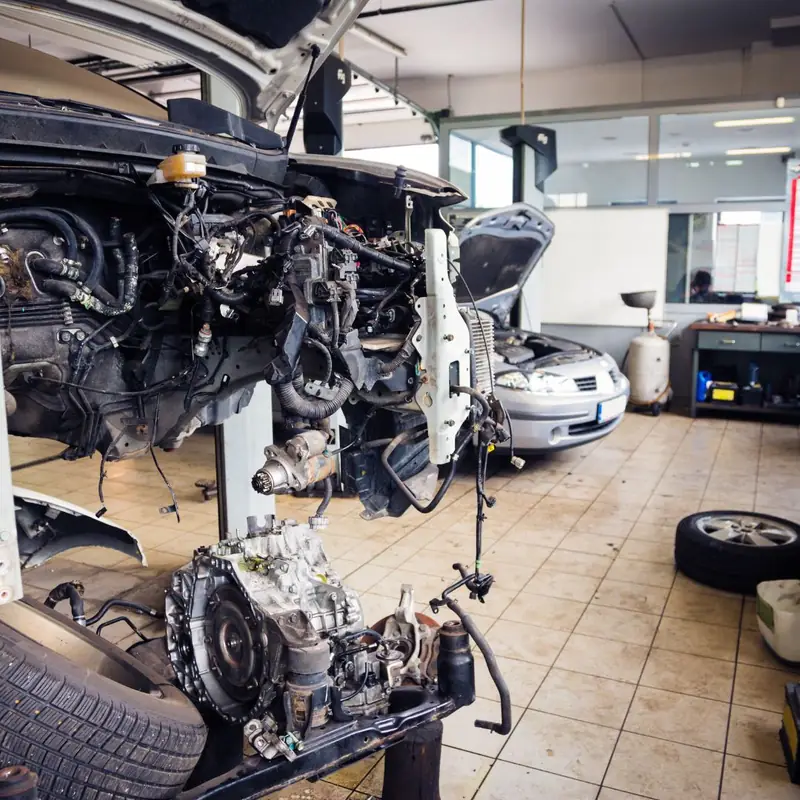
Engine and transmission out of a car on the shop floor during a teardown
Fluid, filter and leaks come before any talk of replacement
Every transmission job at 1644 Main St begins with the same short list: the cleanliness of the filter, any fluid leaks, and whether the fluid sits at the right level. We do it first because a filter, a leak or a fluid level is a smaller repair than a new unit, and you should hear about the smaller options before the bigger one.
When the inspection says the unit itself is done, replacement means a new or rebuilt transmission. The work is physical: we disconnect the transmission from the engine, take it out of the vehicle, install the replacement, and reconnect every component that came off. It all happens in our own bays, and because the cost depends on the vehicle and the unit, the quote comes after the assessment, not before.
Chapter 03
Fluid checks, towing loads and shift feel
After any transmission work, the best habit is a boring one: check the fluid. Colour and smell tell you a lot, since healthy fluid is clean and fairly bright while burnt fluid is dark and smells scorched. If you tow a trailer or haul heavy loads, your transmission works harder and makes more heat, which is what wears fluid and clutches out first.
Pay attention to shift feel, because a change is the earliest warning you get. A shift that used to be smooth and now bumps, a gear that takes a beat too long to engage, a new whine on acceleration. Call (920) 217-5911 when you notice it. If the car will not move at all, we tow it to the shop for diagnosis.
Inspected and repaired in our own shop at 1644 Main St, Green Bay. Call (920) 217-5911.
Diagnosis chart
From slip to finding to fix
How a shifting complaint turns into a repair order here. When the cause is still unclear after the fluid check, the full diagnostic scans the car, and a car that will not move gets a ride on the tow truck to the Main St bay.
The engine revs but the car does not keep up
Slipping. It can be low or burnt fluid, a worn clutch pack, or wear inside the unit. The fluid level and condition rule the cheap causes in or out.
Correct the fluid and filter first. Replace the transmission only if the inspection says the unit itself is done.
A reddish puddle under the middle of the car
A leak from a pan gasket, a seal or a cooler line. Often a far smaller job than the symptom makes it feel.
Repair the leak, then set the fluid to the right level so the unit is not running low.
Vibration, a new whine, or a sudden loss of power
Fluid, a mount, the driveline or the transmission itself can all cause it. The car goes on the lift so we can tell them apart.
Name the failed component, repair it, and road test before you get the keys back.
More work from the same bays
- Full Auto Diagnostic
A warning light that keeps coming back
- Reliable Towing
Stuck at the roadside
- Auto Repair Shop
Knocking, misfires or an oil leak