Brake Noises Explained: Squeal, Grind, Pulse, Soft Pedal and Pull
Every brake problem has a sound or a feel, and learning to read them can keep a small job from becoming a big one.
October 14, 2026 · 4 min read
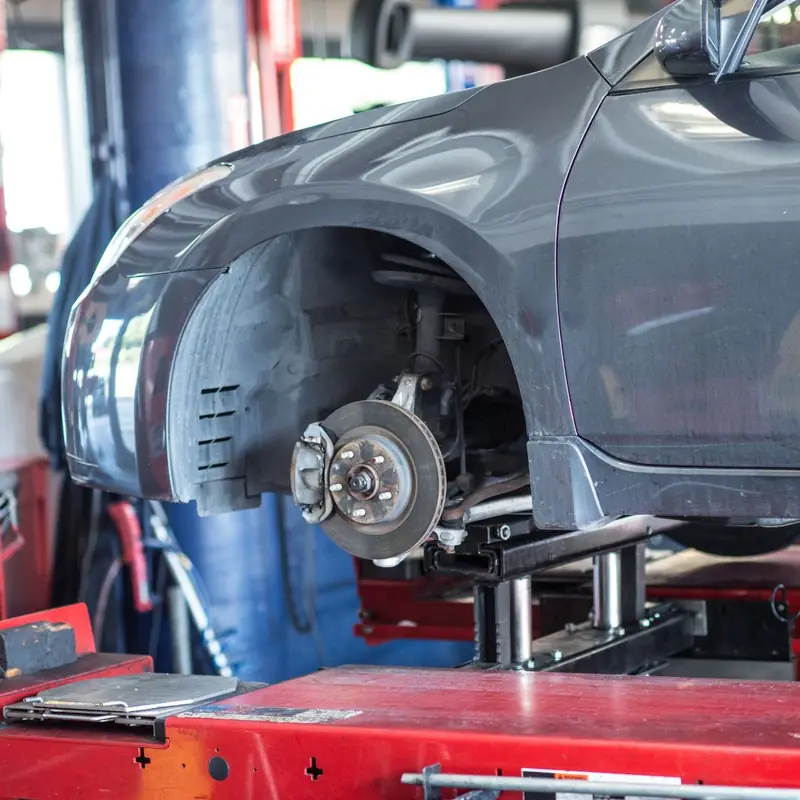
Your brakes are the one system on the car you can't afford to be wrong about. The good news is they tend to complain early. A noise, a vibration or a change in the pedal usually shows up well before the brakes stop working. The bad news is that people turn up the radio. Here's what each sound or feel usually means, so you can decide how soon to get it looked at.
A high squeal when you brake
Most brake pads have a small metal tab called a wear indicator. When the pad material gets thin, the tab touches the rotor and makes a high-pitched squeal on purpose. It's a built-in warning that the pads are getting low. If the squeal shows up when you press the pedal, plan to have them looked at soon.
Not every squeal is wear. Morning squeaks in damp weather can be light surface rust on the rotors that wipes off after the first few stops. A squeal that comes and goes with no braking can be a dust shield rubbing, or pads that vibrate in the caliper. The way to tell the difference is to look, and that takes the wheel off.
Grinding, and a pedal that pulses
A harsh, metallic grinding sound, the kind you feel through the pedal, usually means the pad material is gone and the metal backing plate is cutting into the rotor. At that point you're not just replacing pads anymore. Rotors get scored and ruined, and stopping power drops. If you hear grinding, drive as little as you can and get it in.
If the pedal pulses under your foot or the steering wheel shakes when you slow down from highway speed, the rotors are probably the cause. Heat and wear can leave them with uneven thickness or a surface the pads can't grip smoothly. The brake pedal pushes back each time the pad hits a high spot. Sometimes the shake is in the steering wheel, which points to the front rotors. If you feel it in the seat, it may be the rear. A worn suspension part can cause similar shaking, so a good technician checks both before replacing anything.
A soft pedal, or a pull to one side
A pedal that feels spongy, sinks slowly toward the floor, or needs to be pumped is a different category. That's a hydraulic problem: low or leaking brake fluid, air in the lines, a failing master cylinder, or a worn hose or line. This one should not wait. If the pedal goes lower than it should, or the brake warning light comes on, stop driving it and call for a tow. Brakes work by pushing fluid, and a system that's leaking is a system that can fail all at once.
If the car veers left or right when you brake, one side is doing more work than the other. The usual suspect is a sticking caliper or a collapsed brake hose, where one wheel doesn't release or doesn't clamp evenly. Uneven pad wear, a contaminated pad, or a worn suspension part can do it too. Pulling gets worse in hard stops, which is when you least want surprises, and an overworked brake wears out and overheats faster.
What Wisconsin winters do to brakes
Road salt and brine are rough on brake hardware. Calipers slide on pins that need to move freely, and salt corrosion can make them stick. A stuck caliper leads to uneven pad wear, pulling, a burning smell after a drive, or one wheel that runs hot. Brake lines and hoses can rust through, and rotors grow rust rings and pits that eat pads. Freeze and thaw cycles don't help either.
- After the salt season ends, have the brakes inspected, not just the pads. Calipers, slide pins and lines matter too.
- Rinse the underside of the car when you can after salty roads.
- Pay attention to a car that sits for a few days, then grinds or thumps on the first stop. That's often surface rust, but it's worth confirming.
- A burning smell or one wheel noticeably hotter than the others after a drive means a caliper may be dragging.
What a proper brake inspection includes
You can't judge brakes from the driver's seat. The wheels come off. The tech measures pad thickness and rotor condition, checks the calipers and their slide pins, looks over hoses, lines and brake fluid, and then road tests the car. If something is worn out, the repair covers the worn parts and not a full teardown for show.
Quotes come after the assessment. Nobody can honestly price brakes before looking, since pads alone is a different job than pads, rotors and a caliper.
Bring it in at the first sign
The earlier you catch brake wear, the simpler the repair tends to be. El Mecanico Auto Repair does brake repair and replacement at 1644 Main St in Green Bay. If your car squeals, grinds, pulses, pulls or feels soft, call (920) 217-5911 and describe what you're noticing. If the pedal is going to the floor, ask about a tow rather than driving it in.
El Mecanico Auto Repair, (920) 217-5911
Call (920) 217-5911More articles
Why Your Vehicle's Suspension and Steering System Matters More Than You Think
The parts that decide whether your car stops straight and steers when you ask are hanging under it where nobody looks.
Check Engine Light On? What It Means and What to Do Next
The light tells you something is off. It doesn't tell you which part to buy.